“There is no other wine in the world with as much explosive power as this,” James Halliday wrote in his review of the 1915 Seppeltsfield 100 Year Old Para Vintage Tawny. Although, as detailed in the 1914, it doesn’t explode in the mouth as much as “it implodes, a black hole in space sucking everything into it”.
Made every year since 1878, the 100 Year Old Para Vintage Tawny is the longest unbroken line of single vintage wines in the world, and the world’s only unbroken lineage of single vintage Tawny. At the 2024 Halliday Awards, the 1923 vintage became the first (and remains the only) wine to be inducted into the James Halliday Hall of Fame.
Today – 19 February – Seppeltsfield is releasing the 1926 vintage of the 100 Year Old Para Vintage Tawny. To mark the occasion, the wine's 49th consecutive release, we dug through our archives and collated our favourite tasting notes.
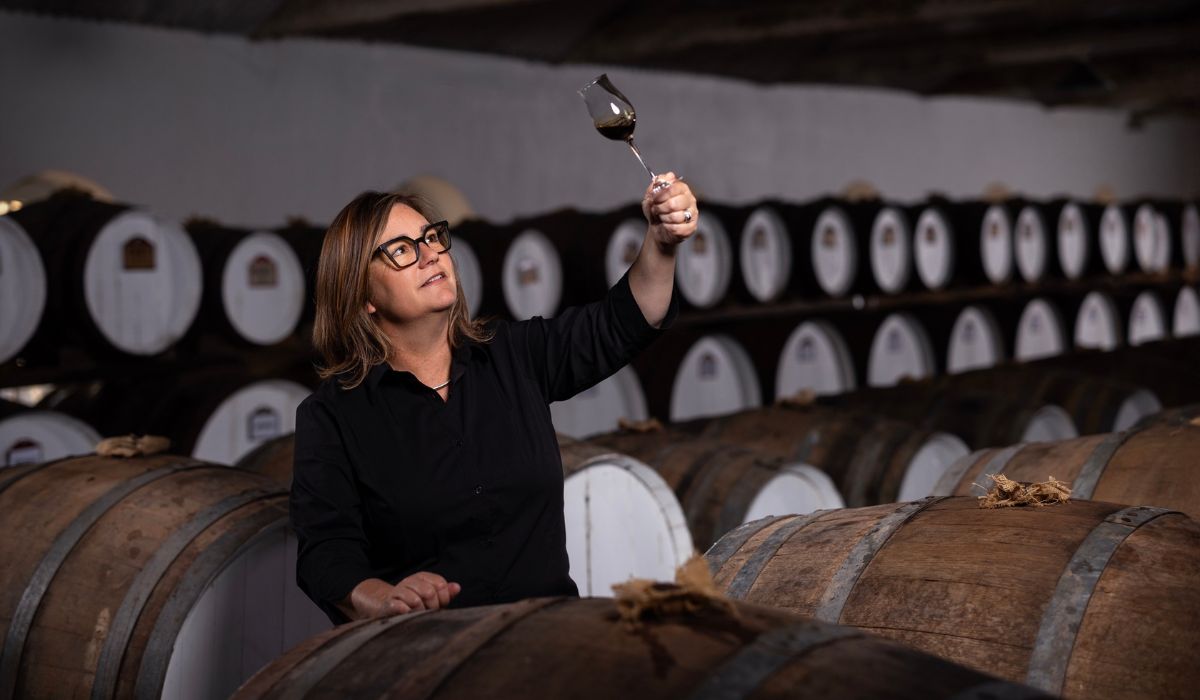
From Dave Brookes’ historical snapshots to more of James’ iconic similes, such as “the bouquet [rears] out of the glass like a dragon from the bowels of the earth,” and his admission, in his review of the 1907, that, “In prior years I have given the wine 98 points, which is clearly wrong. This is the one and only 100-point wine made in Australia,” it’s clear from the below reviews why this incredible wine is so treasured.
Seppeltsfield 100 Year Old Para Vintage Tawny
1926
In 1926, Queen Elizabeth II, Marilyn Monroe and Fidel Castro were born, John Logie Baird demonstrated television for the first time, Francisco Franco was promoted to Brigadier General in the Spanish Army, Robert H. Goddard launched the first liquid-fueled rocket, Rudolph Valentino died, Buster Keaton's 'The General' was the top film, Jelly Roll Morton released 'Black Bottom Stomp' and this was tucked away into barrel. Monumental, otherworldly and unique; the wine is a national treasure. A tawny of incredible depth and stature, a singularity of intense flavour. Liquid dried fruits, candied nuts, mahogany, fruitcake with a thick slather of marzipan, cigar humidor, dark caramel, espresso concentrate, candied figs, wood spice and citrus rind. There's an incredible unctuous texture. Upon its surface the light shifts. It's chiaroscuro in an aqueous form; things flit in and out of view. You get lost in it. It's just epic. Dave Brookes, 100 points.1925
In 1925, New York overtook London to become the largest city in the world, Benito Mussolini and Adolf Hitler's influence was rising, F. Scott Fitzgerald released The Great Gatsby, the Jazz Age was in full swing, and this was tucked away in barrel. That never ceases to blow my mind. It's a singularity of aroma and flavour. Dried fruits in an aqueous solution, candied nuts, mahogany, molasses, marzipan, fancy cigar lounge, espresso liqueur, candied figs and prunes, wood spice and citrus rind. It's in constant movement; light filters in and out, highlighting certain characters, casting shadow on others, in an ever-moving state of change. It's kinetic and endlessly complex and there ain't nothing else like it in the world. It really is a national treasure. Dave Brookes, 100 points.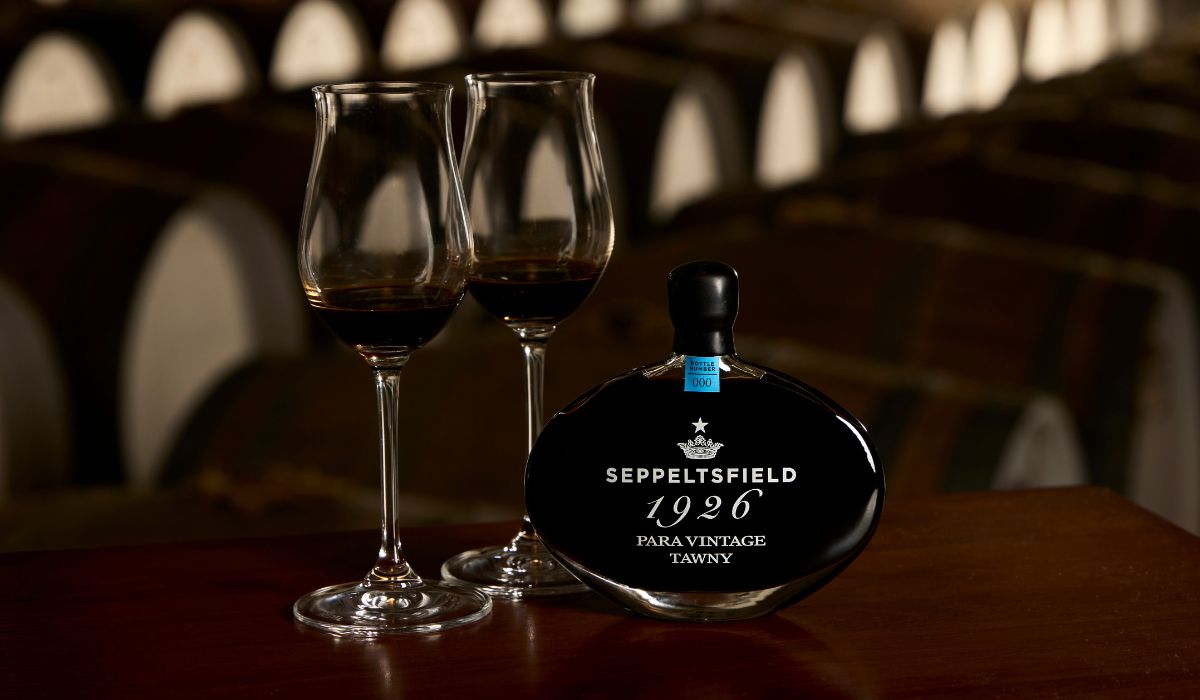
1924
It blows my mind that when this wine was first lovingly tucked away, the world was still swaying from World War I, the first successful around-the-world flight began, Mahatma Gandhi was released from prison and Marlon Brando and Lauren Bacall were born. It's a monumental wine. A tawny of such depth and concentration that it seems reduced to an essence, a singularity of complex aromas and flavours. Liquid dried fruits, candied hazelnuts, mahogany, molasses, rich marzipan-iced fruitcake, cigar lounge, dark caramel, espresso liquor, candied figs, wood spice and citrus rind. New aromas and flavours constantly ghost in and out of frame; the light changes, you marvel at the wines warm velvet flow, its length of flavour, how you're going to get that stain out of your glassware. And then you close your eyes and let it envelop you. It's an epic wine and a national treasure. Dave Brookes, 100 points.1923
The wine is every bit as awesome as its predecessors, the intensity and the flavours lingering in the mouth for a seemingly endless time. Its acidity has none of the edgy cuts that can sometimes need a spice-laden biscuit or chocolate to tame the acidity, though don't feel embarrassed if you have either one or both anyway. 100 points? Of course. It is the one and only wine whose history, past, present and future demand it. But that's not all. The design team has risen to create a stunning upgrade of the box and the print on the 100ml bottle in which this nectar of the gods is sold. James Halliday, 100 points.1922
There's no surprise that this release easily lives up to its rare 100-point rating. The heady bouquet (as usual) is followed by a palate of pure joy; as it enters the mouth, the viscous big bass drum beats with every known spice, and every known preserved and dried fruit. Then the finish has the acidity to provide balance, but the sometimes searing spear of volatile acidity doesn't heat the aftertaste. In the world of wine, no other winery makes a vintage-dated 100yo release of truly extraordinary complexity. James Halliday, 100 points.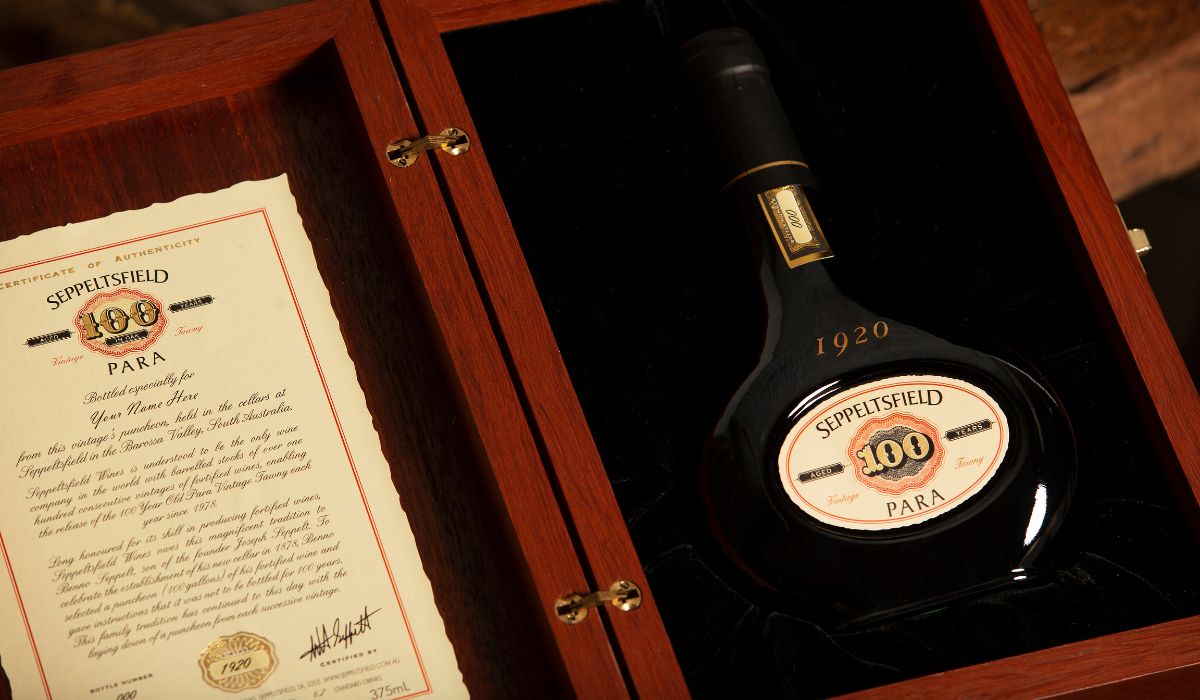
1918
This utterly unique wine is a flavour (and bouquet) black hole in space. It comes to you with speed and intensity more akin to a space rocket, rather than any wine or spirit you have dreamt of. The smallest sip reaches every taste bud in your mouth as you watch the remaining wine on the sides of the glass apply a near-waterproof coat of dark burnt umber colour to the sides. If the searing intensity of the flavour, the bottle, the presentation box, and my 100-point rating (it's the only wine I accord this score) is not enough, then let me say there is no other vintage wine in the world released annually after 100 years in barrel, 100% of the given age. Over time it has lost 66% of its original volume in the barrel, hence the concentration. It is sold in a specially designed and made 100ml bottle in its hinged wooden box. James Halliday, 100 points.1917
The consistency is not far short of treacle, pouring reluctantly from the bottle to the glass, and even more reluctantly from the glass into the mouth, which is already quivering like a bird dog after swirling the glass to savour the toweringly rich and complex bouquet. The aromas are a distillation of every spice you have ever encountered, whether on its own, mixed with others, or in a fruit compote, or a Christmas cake or pudding. An electric current trickles into the mouth along with the wine when you can't bear waiting any longer before taking your first sip and your senses spin. James Halliday, 100 points.1915
There is no other wine in the world with as much explosive power as this; 100ml is the equivalent of 1500ml of conventional wine, or 500ml of Rare Rutherglen Tokay or Muscat. The first micro-sip sends all the senses of taste into a frenzy, with burnt toffee, treacle and molasses magically balanced and freshened by rancio and, even more, acidity. The aroma of the wine will stay in the empty glass for an hour or more, as will its viscosity stain the glass dark mahogany. James Halliday, 100 points.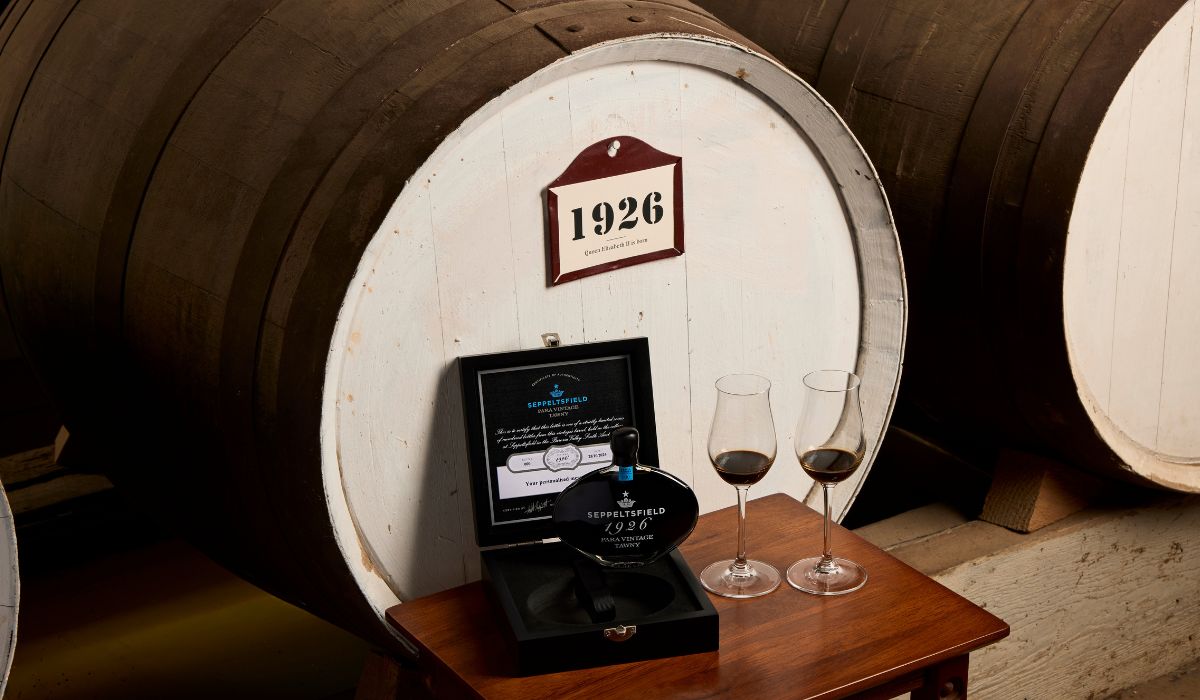
1914
Deep, dark mahogany; pours like treacle, literally stains the walls of the glass and won't let go; burnt molasses; 100-year-old balsamic vinegar; this doesn't explode in the mouth, it implodes, a black hole in space sucking everything into it. All this achieved in the smallest sip. James Halliday, 100 points.1912
Dark burnt umber; the wine paints the sides of the glass when swirled, the bouquet rearing out of the glass like a dragon from the bowels of the earth; exceptionally viscous and thick, it also paints the interior of the mouth, liberating its rainbow of aromas and flavours in a merry-go-round that will continue for as long as you have a few precious drops in the glass. Thereafter, the bouquet will seem equally as potent in the empty glass. The points of 100 have been given for several vintages now, and will be so in the future, simply because this wine is utterly unique in the world as an annual 100% 100-year-old commercial release, and while there may be some genuine single vintage, very old tawny ports in Portugal, they will be few and far between. Superbly packaged and presented. James Halliday, 100 points.1907
The usual honey, treacle consistency, the olive-green/brown wine staining the sides of the glass as it is swirled; offers cinnamon stick, every spice known to man, grandma's Christmas pudding and a hundred other things; the senses almost go into free-fall, so intense and complex is the wine. The length is extraordinary, and all the components (including volatile acidity) are exactly as they should be. In prior years I have given the wine 98 points, which is clearly wrong. This is the one and only 100-point wine made in Australia. James Halliday, 100 points.
Subscribe to the Halliday Wine Companion Podcast
Hear from some of Australia's top winemakers and industry professionals as they share their stories and insights on the Halliday Wine Companion Podcast. Listen here, or on your usual podcast platform, and remember to rate, share and subscribe so you never miss an episode.