It was cold in Paris when I arrived in early January. A searing cold that transported me to a time in the city as a student, as recollections of tastes and textures, sensorial pleasures hidden behind market awnings, or in the cellars of the local cave, were a chime to a life worth living. Perhaps cold like this suited the deprivations of youth, when wine was a source of succour, a quotidian salve. But the best bottles are something more. The best bottles ask questions, their wines limpid in a repose of wonder, like liquid kaleidoscopes revealing moments, places and people. As I struggled with the ignition of my rental car, I reminded myself that I was on the way to experience one of them. A bottle of Romanée-Conti 1899. Thought to be the last on earth.
This sort of bottle is often stashed in a bonded warehouse as an investment, a figment of currency for the ultra-rich, never to be seen let alone drunk. Indeed, Romanée-Conti 1945 holds the record for the highest price ever fetched at auction, US $558,000, at Sotheby’s in 2018. The 1899, however, was purchased by Soo Hoo Khoon Peng to drink, a belated celebration of his 50th birthday. Collector, businessman and co-owner of renowned Australian pinot noir producer, Bass Phillip, Soo Hoo believes that “wine isn’t about status, but learning and human connection,” adamant that the bottle be shared among friends.
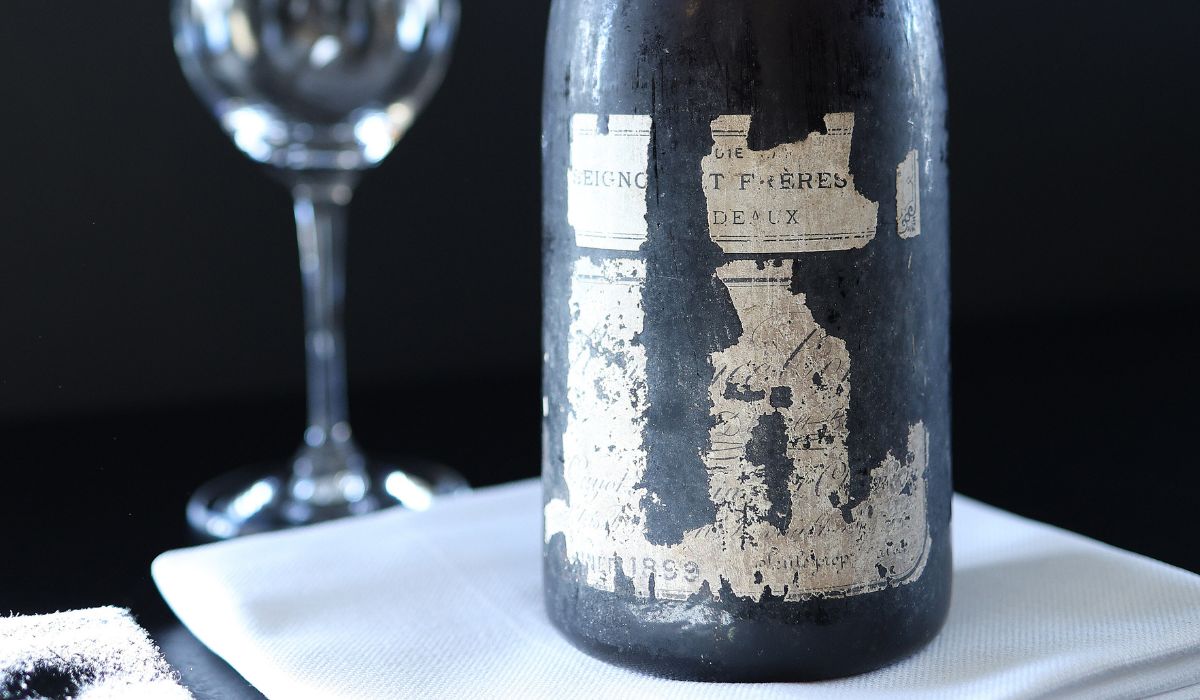
Counting myself among them, I arrived at Pommard restaurant, Auprès de Clocher, to glimpse the time capsule set on a mantle, replete with a gloriously tattered label and a relatively healthy fill. A heavy lead capsule was unblemished but for a chip here and there and a crease of rust, auguring positively for the long lunch ahead as the sun lanced low-lying clouds to bathe the dining room in a prescient light, as photographers from major news networks dispersed and guests arrived.
Other guests included founder of the Vivino app, Heini Zachariassen; editor-in-chief of Wine Advocate and producer in his own right, William Kelley; Olivier Pion of Maison Pion; and Régis Cimmati, both Pion’s fine wine director and a Domaine de la Romanée-Conti (DRC) specialist. Régis estimated the bottle’s worth at approximately US $118,000 based on provenance alone, going to great lengths to decipher the label’s nomenclature, ‘Seign…et’ indicating the bottle’s sale to Bordeaux trader Seignouret, owned by the de Brou de Laurière family. Below, legible even if faded, was the vintage ‘1899’.

Fittingly, the guest of honour was Aubert de Villaine, of DRC. At 86 years, Monsieur de Villaine wove an array of anthologies with an historical loom, bringing the magical bottle to life with a glint in his eye and a spritely cadence to his words. The wine would have been bottled in Santenay back then, he explained, the barrels transported by horse-and-cart. When the wine was made, Romanée-Conti was owned by families Guyot and Chambon, each surname visible on opposite sides of the 1899’s label. The Guyot clan later sold to Jacques Chambon and Edmond Gaudin de Villaine in 1912, the year Domaine de la Romanée-Conti was established. Subsequently any claims to estate ‘DRC-bottled’ wines from pre-1912 are apocryphal; the wines surely fraudulent.
Régis explained that the bottle was sold at a local auction in a six-pack, designated ‘19th Century Red Wines’, after the last member of the de Brou de Laurière family passed, in 2011. Due to label damage, the bottle went unrecognised and the entire lot sold for barely 50 euros! Monsieur de Villaine celebrated this with a grin, inferring his displeasure with the secondary market and its extreme pricing, while admitting that he had never tasted a pre-1900 bottle. The oldest bottle in the Domaine’s stock dates to 1911. The 1899 was later salvaged by a discerning buyer and eventually sold to Soo Hoo.
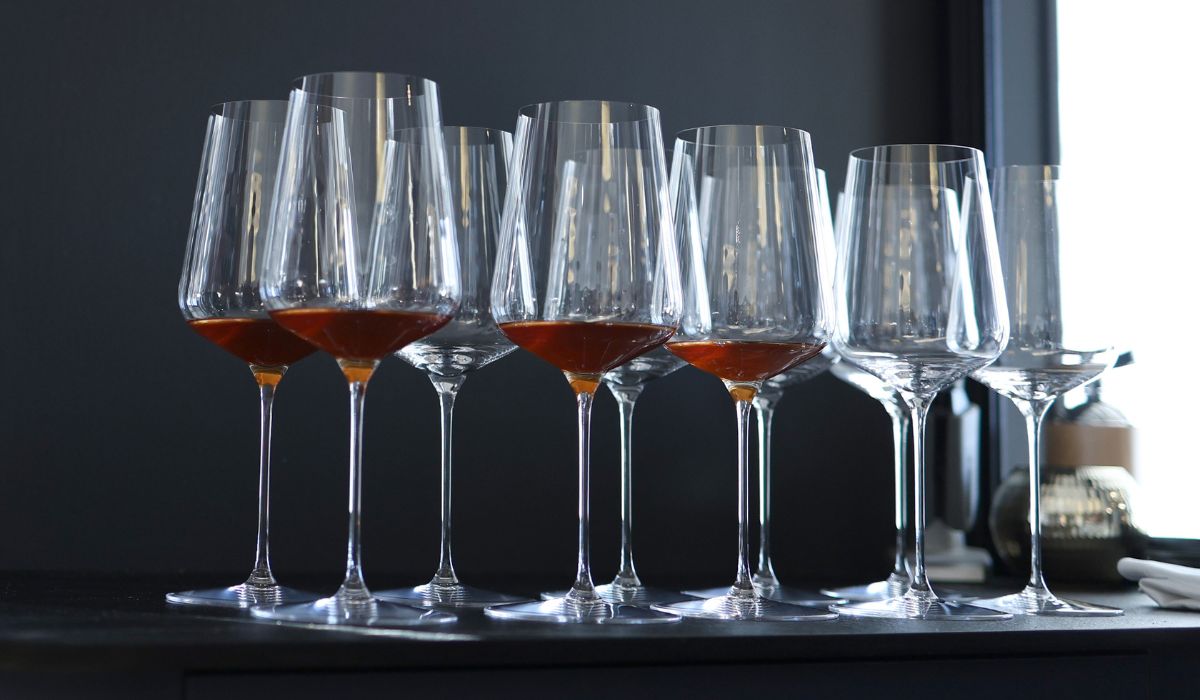
William Kelley was nominated to draw the cork. I breathed a sigh of relief that the responsibility was not mine. The cork was extracted with a combination of corkscrew, Ah-So and ingeniously long tweezers to reveal ‘1899’, inscribed clearly. Mercifully, the bottle was not corked. Miraculously, it was not volatile! A shimmering tawny tinged with red, vital and poised, there were hints of dried quince and tea leaf, sure, but the wine transcended any obvious fruit flavours with an ineffable beauty. Monsieur de Villaine swooned over the lingering finish, while William noted the “heady vinosity”, of pre-phylloxera vines. As with vineyards throughout much of Europe, Romanée-Conti’s vines were eventually grafted on to American rootstock, but not until the 1940s. Régis enthused, “these pre-war ungrafted bottles are the pinnacle of the craft”. Olivier Pion called the 1899 “a miracle”.
There were other great bottles served that day, with my hat tipped to the very fine 1980 DRC la Tache, served alongside its 1975 sibling, a fantastic bottle despite the challenged vintage. A Coche-Dury Corton-Charlemagne 2009, too, was a standout, despite a vintage laden with a bit too much fruit. Yet as friendships were kindled, wine’s spellbinding capacity to bring people together in celebration of a moment, resolute and invigorating, was clear. The 1899 was a memento mori amidst a cast of stars, its semiotic powers unrivalled.
Expand your knowledge with Halliday Wine Academy
Halliday Wine Academy offers an in-depth view of both Australian and international wine landscapes. Select Introduction to Wine to learn about Australian wine and regions or choose from one of our Wines of the World courses to get to know international wines.
Wines of the World: Europe explores the iconic wines, regions and laws of France, Spain, Portugal, Hungary, Germany and Austria, while Wines of the World: Europe and Beyond delves deeper into Italy, Greece, the Americas, South Africa and New Zealand.

More like this
-
From the tasting team
The vintage of the century: Katrina Butler on Bordeaux 2022
15 Dec 2025 -
From the tasting team
Jane Faulkner reflects on Bordeaux's acclaimed 2005 vintage, 20 years on
15 Oct 2025 -
From the tasting team
A Roumier rumination: Philip Rich tastes 15 vintages from a top Burgundian producer
27 Jan 2025